Die cutting is an essential manufacturing process used across industries to create precise shapes and forms from various materials. At the heart of this process are die cutting dies – specialized tools that make accurate, repeatable cuts possible. As a leading manufacturer of die-cut adhesive tapes and various die-cut materials, TOPKING understands the critical importance of selecting the right die cutting solution for optimal production results. This comprehensive guide explores everything you need to know about die cutting dies, their types, and applications.
What Are Die Cutting Dies?
Die cutting dies are precision tools used in the die cutting process to cut, shape, or form materials into specific designs. Think of a die cutting die as a custom-made cookie cutter – just as a cookie cutter shapes dough into specific forms, a die cutting die shapes materials like paper, cardboard, plastic, foam, and metal into desired patterns.
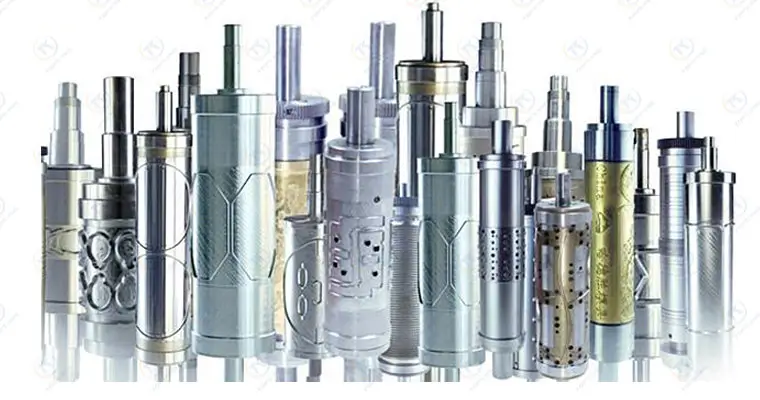
In practical terms, when a printed flat sheet needs to be transformed into a three-dimensional box, a die cutting die matching the box’s flat pattern is created to punch and fold the material into its final shape. These tools are also commonly referred to as cutting dies, punch dies, or simply dies.
Major Classifications of Die Cutting Dies
The world of die cutting offers numerous die types, each designed for specific applications and materials.
The selection of appropriate die cutting dies depends heavily on material characteristics such as
thickness, hardness, and precision requirements. Based on blade angle, hardness, surface treatment, and
construction method, there are over 100 different variations. Here are the most common types used in
modern manufacturing:
- Aluminum Alloy Dies
- Engraved Cleaning Dies & Etched Dies
- Aluminum Plate Dies
- Plastic Dies
- Wooden Board Dies (Laser Dies)
- Hardware Dies & QDC Composite Dies
- Rotary Dies & Hot Stamping/Embossing Dies
Let’s explore each type in detail:
1. Aluminum Alloy Die Cutting Dies
Aluminum alloy dies feature precision-engineered construction with laser-cut slots in solid aluminum
bases for optimal blade placement.
Technical Specifications:
- Blade height: 3.5mm.
- Precision: ±0.1mm tolerance.
- Blade replaceability: Interchangeable blade system for extended tool life.
- Deformation resistance: Superior dimensional stability.
Benefits:
- High precision: Exceptional accuracy for demanding applications
- Blade maintenance: Easy blade replacement extends die life
- Material compatibility: Optimized for materials 0.5mm and under
Applications: Premium choice for high-precision PC (polycarbonate) materials and applications requiring superior accuracy.
2. Engraved Die Cutting Dies & Etched Dies
Engraved Die Cutting Dies
Engraved die cutting dies represent the pinnacle of precision in electronic component manufacturing. These dies are CNC-machined from a single block of tool steel, offering exceptional accuracy and durability.
Key Specifications:
- Material thickness: 8-15mm tool steel.
- Precision: ±0.03mm tolerance.
- Lifespan: 100,000-200,000 cuts.
- Minimum spacing: 0.6mm between blades.
Advantages:
- Seamless cutting: No joint marks on cut products.
- Resharpening capability: Blades can be reground when dulled.
- Versatile design options: Accommodates various hole patterns, steps, creases, and positioning features.
- Superior blade height: Up to 6mm cutting height possible.
- Smooth cutting lines: Produces clean, precise cuts with high repeatability.
- Cost-effective: More affordable than aluminum alloy dies for high-precision applications.
Applications: Ideal for products requiring extremely tight tolerances, suitable for materials up to 0.25mm thickness.
Etched Die Cutting Dies
Etched dies are precision-machined from solid tool steel blocks using CNC technology, offering exceptional flatness and accuracy for ultra-precise applications.
Key Features:
- Flat cutting surface: Minimal blade height adjustment required.
- Flexible blade combinations: Accommodates full-cut and half-cut configurations.
- Standard blade height: Approximately 1.5mm.
- Exceptional precision: ±0.03mm accuracy.
- Minimum blade spacing: 0.3mm between cutting edges.
- Consistent reproduction: Multiple identical patterns with virtually zero variance.
Performance Specifications:
- Material compatibility: Optimized for materials under 0.2mm thickness.
- Cutting lifespan: 50,000-200,000 cycles.
- Surface finish: Produces smooth, clean cut edges.
Applications: Perfect for precision cutting of thin materials requiring exceptional dimensional accuracy.
3. Aluminum Plate Die Cutting Dies
Aluminum plate dies combine plastic bases with laser-cut aluminum blade carriers, offering balanced performance and economy.
Construction Details:
- Blade height: 3mm.
- Aluminum plate thickness: 5mm.
- Base thickness: 3mm plastic.
- Overall height: 11mm.
- Precision: ±0.2mm tolerance.
Advantages:
- Dimensional stability: Resistant to blade deformation.
- Replaceable components: Damaged blades can be easily replaced.
- Economic value: Cost-effective solution for quality cutting.
- Versatile compatibility: Suitable for various PC materials up to 0.5mm.
Applications: Economical choice for diverse PC material cutting applications.
4. Plastic Die Cutting Dies
Plastic dies utilize wire EDM-cut plastic boards with inserted pre-bent blades, providing flexible solutions for lighter-duty applications.
Specifications:
- Blade height: 2.5-3mm
- Precision: ±0.3mm tolerance
- Blade flexibility: Moderate deformation under stress
- Reusability: Multiple-use capability with blade replacement
Performance Characteristics:
- Material compatibility: Optimized for paper products and PC materials under 0.25mm
- Cost advantage: More economical than etched dies
- Application focus: Ideal for adhesive tape materials and high-volume, low-complexity products
- Expected lifespan: 100,000-200,000 cutting cycles
Applications: Perfect for high-volume production of adhesive materials and simple cutting patterns. This die type is one of the most commonly used in adhesive tape manufacturing due to its cost-effectiveness and suitability for various tape materials.
5. Wooden Board Die Cutting Dies (Laser Dies)
Wooden dies are constructed from solid wood boards using wire EDM (Electrical Discharge Machining) cutting technology.

Specifications:
- Blade height: 6mm
- Base thickness: 18mm
- Precision: ±0.3mm tolerance
- Material capacity: Suitable for materials up to 0.5mm thickness
- Small hole capability: Can create holes as small as 3mm diameter (with spring loading)
Characteristics:
- Cost-effective: Moderate pricing for large-format applications
- Versatile applications: Ideal for thick, hard materials with larger dimensional tolerances
- Expected lifespan: Approximately 50,000 cycles (varies by material type)
Applications: Best suited for large-format projects involving thick, rigid materials where precise tolerances are less critical. Along with plastic dies, wooden board dies are among the most frequently used in adhesive tape die cutting due to their versatility and cost-effectiveness for various material thicknesses.
6. Hardware Dies & QDC Composite Dies
Hardware Dies (Metal Stamping Dies)
Hardware dies represent industrial-grade tooling used with various press machines to form metal components through applied pressure.
Classification by Process:
- Blanking dies: Cut materials along closed or open contours
- Bending dies: Create angular forms in sheet materials
- Drawing dies: Form hollow shapes from flat blanks
- Forming dies: Shape materials through localized deformation
Classification by Operation:
- Single-operation dies: Complete one process per press stroke
- Compound dies: Perform multiple operations simultaneously at one station
- Progressive dies: Execute sequential operations as material advances through multiple stations
- Multi-station dies: Handle complex part movement through various processing stations
Specific Die Types:
- Blanking Dies: Include drop-through dies, piercing dies, cutoff dies, notching dies, trimming dies, and parting dies for material separation operations.
- Bending Dies: Transform flat materials into angular configurations along predetermined bend lines.
- Drawing Dies: Convert flat blanks into hollow components or modify existing hollow parts’ dimensions.
- Forming Dies: Create complex shapes through localized material deformation, including bulging, necking, expanding, flanging, and sizing operations.
Applications: Essential for high-volume metal component production across automotive, electronics, appliances, and industrial equipment sectors.
QDC Composite Die Cutting Dies
QDC (Quick Die Change) composite dies represent advanced modular tooling systems combining the precision of engraved or etched dies with the stability and accuracy of hardware dies.
System Advantages:
- Modular flexibility: Quick die changes for different cutting requirements
- Precision combination: Merges cutting die advantages with stamping die stability
- Multi-stage capability: Enables sequential processing operations
- Superior accuracy: Achieves ±0.05mm tolerance for dual-hole positioning
Applications:
- Complex geometries: Ideal for intricate patterns difficult to waste-strip
- Multi-operation processing: Handles sequential cutting and forming operations
- Precision assembly: Critical for applications requiring exact hole-to-hole positioning
- Tool longevity: Renewable tooling through modular component replacement
Applications: Premium solution for complex, high-precision components requiring multiple processing steps.
7. Rotary Dies, Hot Stamping, and Embossing Dies
Rotary cutting systems provide continuous processing capabilities for high-speed production environments, while hot stamping and embossing dies add decorative and functional surface treatments.
Rotary Die Benefits:
- Continuous operation: Eliminates start-stop cycles for improved productivity
- High-speed capability: Processes materials at elevated feed rates
- Consistent quality: Maintains uniform cutting pressure and speed
- Reduced material waste: Optimized material utilization through continuous feeding
Hot Stamping & Embossing Applications:
- Decorative finishing: Adds metallic foils, colors, and textures
- Functional features: Creates raised or recessed surface elements
- Branding enhancement: Applies logos, text, and decorative patterns
- Multi-layer processing: Combines cutting with surface treatment operations
Applications: Rotary dies are particularly effective for continuous adhesive tape production and high-volume manufacturing of standard products.
Choosing the Right Die Cutting Die
Selecting the optimal die cutting solution depends on several critical factors. The choice of die cutting die is primarily determined by material characteristics including thickness, hardness, adhesive properties, and precision requirements.
Material Considerations:
- Thickness requirements: Different dies accommodate varying material gauges
- Material properties: Hard, soft, flexible, or rigid materials require specific die designs
- Surface finish needs: Some applications demand superior cut quality
Production Requirements:
- Volume expectations: High-volume production may justify premium tooling investment
- Precision demands: Tight tolerances require specialized die types
- Operational complexity: Multi-step processes benefit from composite or progressive systems
Economic Factors:
- Initial investment: Balance tooling costs against production volume
- Maintenance requirements: Consider blade replacement and resharpening needs
- Expected tool life: Evaluate total cost per part over die lifespan
Industry Applications
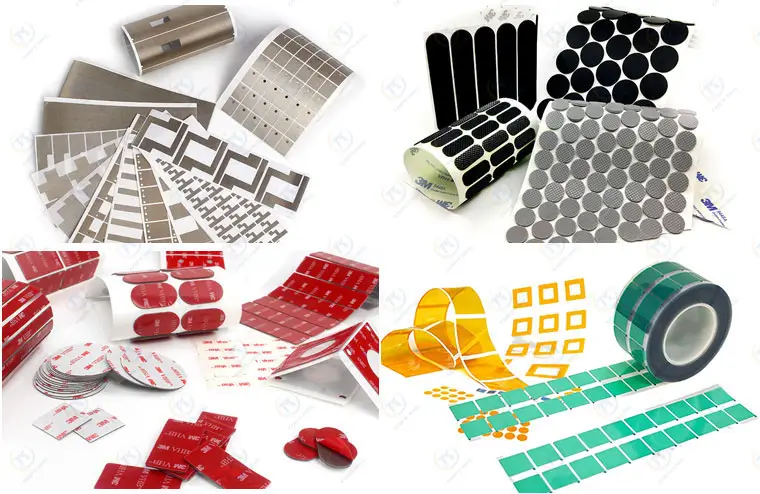
Die cutting dies are utilized across numerous industries for various applications. Manufacturers like TOPKING, which specializes in manufacturing adhesive tapes and providing die cutting services for materials such as silicone rubber gaskets, sealing materials, EVA gaskets, insulation materials, thermal conductive materials, and electrically conductive materials, rely on different die types based on specific material requirements and application needs.
Conclusion
Die cutting dies form the foundation of modern precision manufacturing, enabling the transformation of raw materials into countless finished products. From simple paper crafts to complex electronic components, the right die cutting solution ensures quality, efficiency, and cost-effectiveness.
Understanding the various die types, from high-precision aluminum alloy dies to versatile plastic and wooden board dies commonly used in adhesive tape manufacturing, empowers manufacturers to make informed decisions that optimize their production processes. Whether you’re producing high-volume consumer goods or precision electronic components, there’s a die cutting solution designed to meet your specific requirements.
The continued evolution of die cutting technology promises even greater precision, efficiency, and versatility, making this essential manufacturing process more accessible and effective across industries worldwide.