Introduction
In today’s diverse material market, foams have become indispensable across various industries due to their excellent cushioning, sound insulation, thermal insulation, and shock absorption properties. Among the most common are EVA foam (Ethylene Vinyl Acetate Foam) and PE foam (Polyethylene Foam). While both belong to the foam family, their distinct materials and manufacturing processes lead to significant differences in performance, safety, and application suitability.
As a professional die-cutting service provider, TOPKING Tapes understands the critical importance of material selection. This article will guide you through the key distinctions between EVA foam and PE foam, offering a comprehensive overview to help you make an informed decision.
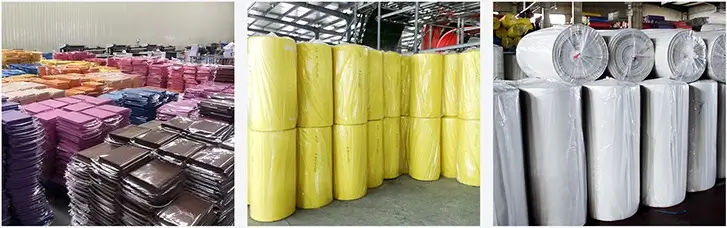
EVA Foam vs. PE Foam: Core Differences
| Indicator | EVA Foam (Ethylene Vinyl Acetate Foam) | PE Foam (Polyethylene Foam) |
| Material Composition | Made from Ethylene Vinyl Acetate copolymer, a high-performance elastomeric material. | Made from Polyethylene (PE), a thermoplastic polymer. |
| Softness & Elasticity | High softness, excellent elasticity, comfortable feel, good resilience. | Relatively firmer, good cushioning, but less soft than EVA, slightly lower resilience. |
| Safety | Inherently non-toxic and safe. Potential for formamide risk if improperly processed, but high-quality EVA is safe. | Typically does not contain formamide, considered safer, especially for infant products. |
| Durability & Abrasion Resistance | Excellent abrasion and corrosion resistance, not prone to cracking. | Good abrasion resistance, but may undergo permanent deformation under prolonged pressure. |
| Water Absorption | Low water absorption, offers some moisture resistance and thermal insulation. | Extremely low water absorption, providing excellent moisture and thermal insulation properties. |
| Processing | Easily thermoformed, cut, and die-cut into various complex shapes. | Easily cut and die-cut, but thermoforming may be less flexible than with EVA. |
| Typical Applications | Shoe soles, sports mats, yoga mats, floor mats, anti-slip bath mats, soundproofing panels, toys, packaging liners, automotive interiors, medical device components. | Packaging fillers, buoyancy aids, insulation materials, sporting goods (e.g., life vests, pads), building insulation/acoustic layers, automotive components (e.g., seals). |
| Cost | Generally slightly higher cost compared to PE foam. | Relatively lower cost, offering high cost-effectiveness. |
EVA Foam Advantages and Considerations
EVA foam is highly sought after for its exceptional softness and elasticity, making it an ideal choice for applications demanding a comfortable feel and superior cushioning. It is widely used in shoe soles for walking comfort and in gymnastics mats and bath mats for safety and anti-slip protection. EVA foam’s excellent corrosion resistance and low water absorption also make it perform well in damp environments. (Related post: EVA Foam Market >>)
Key Advantages of EVA Foam
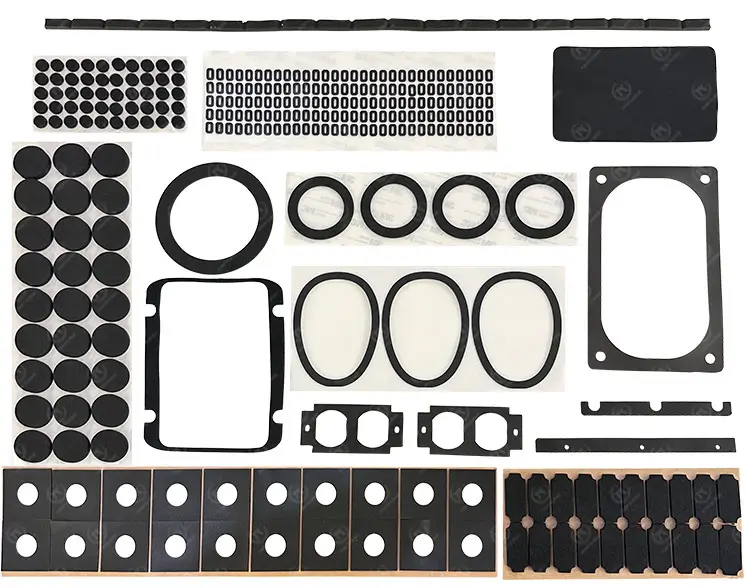
- Superior Shock Absorption: EVA foam offers excellent shock absorption properties, often superior to traditional packaging materials like expanded polystyrene (EPS). This makes it a prime choice for protective packaging.
- Environmental Friendliness & Safety: EVA foam is considered a new generation of environmentally friendly plastic packaging material. It is inherently non-toxic and meets environmental requirements. While certain processing agents could pose risks, high-quality EVA products are safe and reliable.
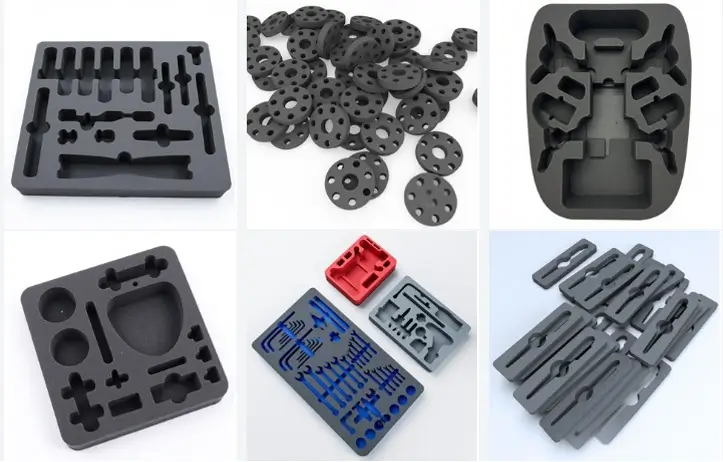
- Design Flexibility: EVA rubber-plastic products can be designed and processed into various shapes, making them highly adaptable. Its variable density also allows for a broader range of applications.
- Export Market Advantage: Due to its environmental compliance, safety, and excellent shock-absorption properties, EVA foam is often considered an optimal choice for export products, ensuring compliance with international standards and customer expectations.
Considerations for EVA Foam
However, there are a few points to consider when choosing EVA foam:
- Formamide Concerns: Some EVA products may use formamide as a blowing agent during manufacturing. If residual formamide is present, it can cause skin and eye irritation. Choosing reputable suppliers that adhere to environmental standards (e.g., REACH, RoHS) is crucial.
- Compression Set: While highly elastic, prolonged exposure to heavy loads can lead to some permanent deformation in EVA foam.
PE Foam Strengths and Potential Application
PE foam stands out for its excellent cushioning capabilities, superior moisture and thermal insulation properties, and cost-effectiveness, making it a significant player in protective applications. Its extremely low water absorption makes it ideal for environments requiring robust water resistance.
Key advantages of PE Foam
- High Safety: PE foam typically does not contain formamide, making it a preferred choice for applications with extremely high safety requirements, such as infant products and food packaging.
- Superior Cushioning & Protection: Effectively absorbs impact energy, safeguarding fragile items or equipment from damage.
- Durability: Good chemical resistance and aging properties ensure stable performance in various conditions.
Specialized Application: PE Foam Tapes
Beyond its use as a base material, PE foam is also utilized in specialized forms, such as foam tapes. A PE foam tape is constructed with a PE foam core, coated on both sides with high-performance pressure-sensitive adhesives (e.g., acrylic or rubber-based adhesives).

It is then laminated with a single or double-sided silicone release liner. These tapes can be supplied in rolls or die-cut into various shapes, and are available in different thicknesses, densities, and colors.
Properties of PE Foam Tapes:
- Excellent Weather Resistance: Suitable for outdoor applications.
- Good Cushioning: Provides impact and vibration dampening.
- Chemical Resistance: Withstands exposure to certain chemicals.
- Sound Absorption: Offers acoustic dampening properties.
- Superior Adhesion: Ensures reliable bonding.
These properties make PE foam tapes highly suitable for a wide range of industrial applications, including nameplates, decorative trim, building materials, electronics, home furnishings, automotive interiors, medical protection, and precision machinery.
How to Choose the Right Material for Your Needs?
Deciding between EVA and PE foam requires a comprehensive evaluation of your specific requirements:
Application Scenario
- Need extreme softness and comfort? EVA foam is likely the better choice (e.g., for sports mats, insoles).
- Require high-impact cushioning and shock absorption with budget constraints? PE foam offers better cost-effectiveness.
- Product involves skin contact and demands high safety? Prioritize formamide-free PE foam or certified EVA foam.
- Operating in a humid environment? Both offer good moisture resistance, but PE foam’s extremely low water absorption is particularly advantageous.
- Specific need for a foam tape with robust weather resistance and adhesion? PE foam tape might be ideal.
Performance Requirements
What are your specific needs regarding elasticity, resilience, abrasion resistance, and weatherability?
Processing Complexity
If intricate shapes are required, EVA foam may be easier to achieve precise die-cutting and molding. (Related post: Die Cut EVA Foam Challenges >>)
Cost Budget
PE foam is generally more budget-friendly than EVA foam.
Export Market Considerations
If exporting, EVA’s recognized environmental compliance and safety profile can be advantageous.
Professional Die-Cutting Foam Solution: Topking Tapes
Regardless of whether you choose EVA or PE foam, precise die-cutting is paramount to ensuring the final product’s performance and aesthetics. TOPKING Tapes boasts years of experience and advanced equipment in foam die-cutting, providing high-precision solutions for both EVA and PE foams tailored to your specific needs.
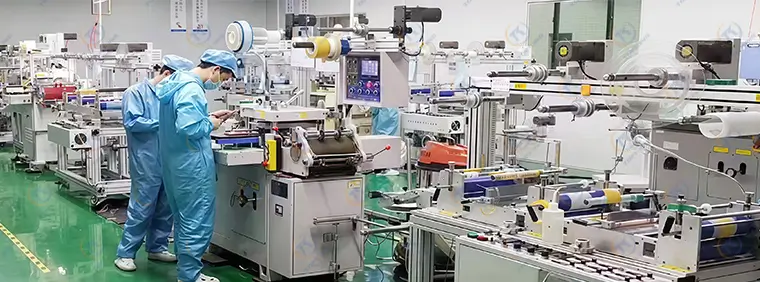
- Customized Services: We produce foam components of any shape and size according to your drawings and specifications.
- Material Diversity: We offer a wide range of EVA and PE foam options and can recommend the most suitable material based on your application.
- Quality Assurance: Our rigorous production processes ensure that every die-cut piece meets high-quality standards.
Related Questions about EVA Foam and PE Foam
1. How do EVA foam and PE foam differ in chemical resistance?
PE foam generally exhibits broader chemical resistance, offering better protection against various solvents, acids, and bases. EVA foam also has good chemical resistance, but it may not be as comprehensive as PE foam.
2. Is EVA foam more expensive than PE foam?
Yes, typically, EVA foam has a slightly higher production cost and price point compared to PE foam.
3. Which foam returns to its original shape better after compression?
EVA foam usually has better resilience and recovers to its original shape faster and more effectively after compression, owing to its highly elastic material properties.
4. What foam should be used for packaging, sports equipment, or cushioning?
- Packaging: For products requiring precise cushioning without absolute maximum safety demands, EVA foam can provide soft protection. However, if the product is fragile or sensitive to chemicals, PE foam might be a better choice due to its stronger cushioning and safety profile.
- Sports Equipment: EVA foam is widely used in sports mats, protective gear, and insoles due to its softness, elasticity, and comfort. PE foam might be used for sports equipment requiring more robust support or buoyancy (e.g., life vests, certain pads).
- Cushioning: The specific choice depends on the required impact absorption strength, tactile preference, and safety considerations. Opt for EVA for soft and comfortable cushioning, and PE for high-intensity shock protection.
Conclusion
Both EVA foam and PE foam have their unique advantages, and the choice hinges on your specific application requirements. Understanding their differences and aligning them with your project goals is the first step towards making the right decision.
Still struggling to choose the right foam material? Or in need of high-quality foam die-cutting services? contact our expert team for a free consultation and quote!