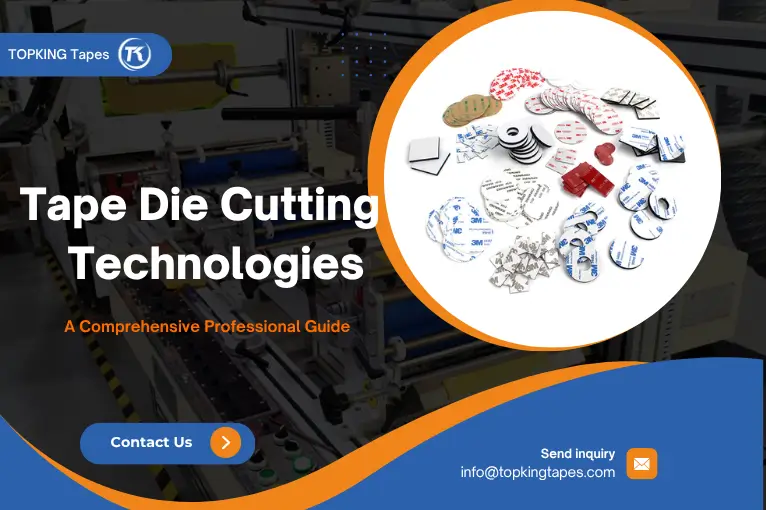
In today’s rapidly evolving technological landscape, manufacturing industries continue to revolutionize their processes. Adhesive tapes, as fundamental and critical industrial materials, have penetrated virtually every aspect of our lives, from everyday electronic product assembly to high-end automotive manufacturing sectors. Among the numerous stages in tape processing, die-cutting technology has become a pivotal process that enhances the application value of adhesive tapes by unlocking new possibilities. This comprehensive guide explores the intricate world of tape die-cutting technologies.
Overview of Tape Die-Cutting Technology
Die-cutting technology finds extensive applications in adhesive tape processing, particularly holding a crucial position in the automotive and electronics industries. Simply put, tape die-cutting is a process that utilizes specialized cutting dies to cut adhesive tapes into shapes that meet the requirements of various application scenarios.

Core Tape Die-Cutting Technologies
Different tape die-cutting technologies each possess unique advantages and limitations, with common types including basic half-cutting, multi-layer laminated material die-cutting, gapless die-cutting, and gap die-cutting.
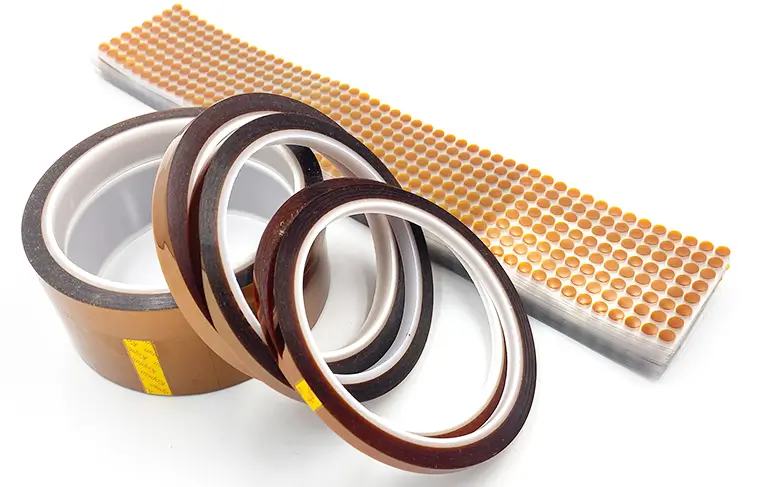
Half-Cutting Technology: Foundation for Roll and Sheet Materials
Characteristics
This die-cutting technology precisely cuts through a single layer of material without damaging other layers, essentially cutting through only one layer’s thickness.
Cost Considerations
As a relatively simple and economical tape die-cutting manufacturing method, it offers superior cost advantages compared to full-cutting and multi-layer laminated die-cutting processes.
Gapless Half-Cutting Technology
Key Features:
- Enables side-by-side arrangement of die-cut pieces without gaps between them
- Achieves 100% material utilization since no edge material or gap waste needs to be removed
- Trimming processes remain essential
Advantages:
- Zero material waste due to the near-lossless production mode
- Reduced production steps leading to lower manufacturing costs
Limitations:
- Not suitable for all materials and adhesives—viscoelastic materials are prone to re-adhesion phenomena
- Greater difficulty in separating die-cut pieces from release liner
- Visual quality inspection of die-cut pieces is challenging due to the absence of edge material and gap waste that typically ensure cutting quality
Cost Analysis: Production costs are lower compared to gapped die-cutting due to the virtually waste-free production model and reduced processing steps.
Gap Die-Cutting Technology
Key Features:
- Maintains spaces between die-cut pieces
- Gap dimensions can be precisely adjusted according to specific customer requirements
Advantages:
- Suitable for producing die-cut pieces of various shapes
- Enables easy-peel tab design implementation
- Gaps between pieces better accommodate semi-automated and fully automated application requirements
Disadvantages:
Higher material waste compared to gapless production methods
Cost Considerations:
- Higher processing costs compared to gapless production due to the need for customized die-cutting tools
- Material waste and additional production steps contribute to elevated costs
7 Advanced Tape Die-Cutting Solutions
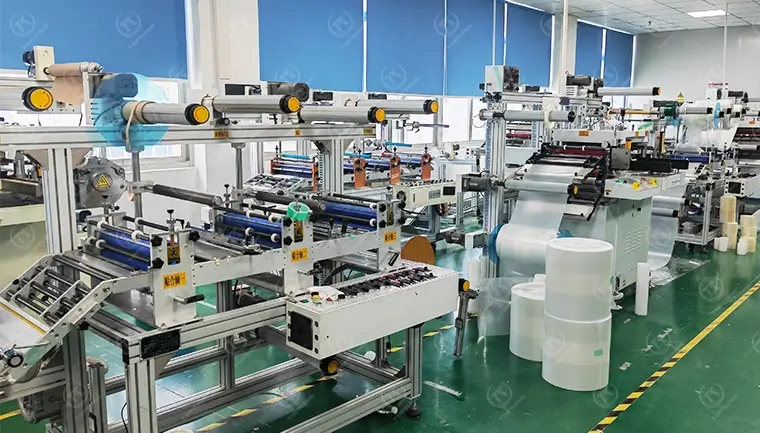
Beyond the fundamental half-cutting, multi-layer laminated material die-cutting, gapless, and gap die-cutting methods, specialized die-cutting solutions address diverse practical requirements. These include:
- Perforation design
- Positioning tear-tab design
- Back-cut release liner design
- Positioning feature design
- Product identification feature design
- Release liner perforation line design
- Easy-peel tabs and extended release liner
Next, we will analyze the 7 die-cutting processes in detail.
1. Perforation Design
Perforation design involves penetrating all material layers to complete hole-punching operations. This process can be combined with multi-layer laminated die-cutting procedures, targeting only specified areas of die-cut pieces for perforation design.
2. Positioning Tear-Tab Design
The primary function of positioning tear-tab design is to secure die-cut pieces at specified positions on the release liner while completely cutting the remaining contours of the pieces. In this design, there are no through-holes outside the die-cut pieces—tear-tabs fix the pieces to roll or sheet materials through several small connection points. Additionally, adhesive and non-adhesive zones can be designed according to customer requirements.
3. Back-Cut Release Liner Design
During production processes, pre-cut release liners are often used as optional tear-tabs. Back-cut design optimizes the application methods of die-cut pieces, providing greater operational convenience.
4. Positioning Feature Design
Positioning feature design primarily assists personnel in accurately determining die-cut piece locations. This can be achieved by creating through-holes in die-cut pieces or by printing visible positioning information directly onto the pieces.
5. Product Identification Feature Design
Product identification feature design provides product-related information for manufacturers or end users. These features encompass usage instructions, product codes, and left/right side markings designed to reduce application errors.
6. Release Liner Perforation Line Design
The perforation line design on release liners creates a series of intermittent cuts similar to postage stamp perforations. This facilitates separation of die-cut pieces from roll or sheet materials, allowing pieces to be removed together with the release liner.
7. Easy-Peel Tabs and Extended Release Liner
Easy-Peel Tabs: The non-adhesive portions of easy-peel tabs provide touchable areas that can be used for removing or positioning die-cut pieces.
Extended Release Liner: Extended release liner portions are touchable and can similarly be used for removing or positioning die-cut pieces.
Tape Die-Cutting Industry Applications and Benefits
Die-cutting technologies in tape manufacturing serve critical roles across multiple industries:
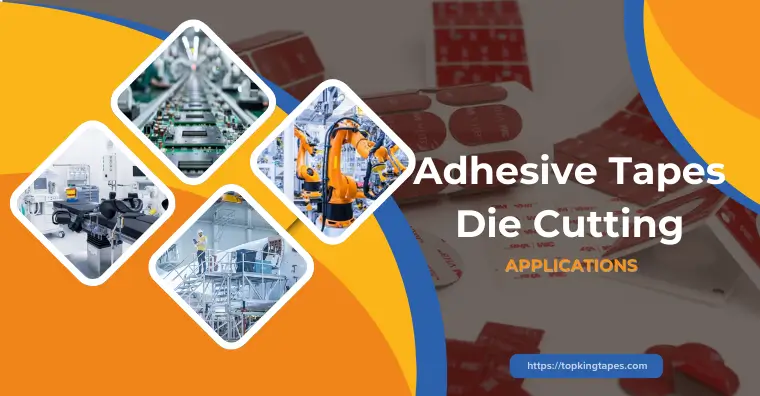
- Electronics Industry: Precise component positioning, EMI shielding, and thermal management solutions
- Automotive Sector: Weather sealing, noise dampening, and structural bonding applications
- Medical Devices: Biocompatible adhesive solutions with precise geometries
- Aerospace: Lightweight, high-performance bonding solutions with exact specifications
Quality Considerations and Best Practices
When implementing tape die-cutting technologies, manufacturers must consider:
- Material Compatibility: Ensuring cutting methods align with substrate properties
- Precision Requirements: Meeting tight tolerance specifications for critical applications
- Production Volume: Balancing cost-effectiveness with quality requirements
- Environmental Factors: Considering temperature, humidity, and chemical resistance needs
Conclusion
Through comprehensive analysis of various common types in tape die-cutting technology, it becomes evident that each tape die-cutting method possesses unique advantages and suitable application scenarios. The selection of appropriate die-cutting technology depends on specific application requirements, cost considerations, production volumes, and quality specifications. As manufacturing industries continue to evolve, these tape die-cutting technologies will undoubtedly play increasingly important roles in creating innovative adhesive solutions that meet the demanding requirements of modern industrial applications.
Understanding these technologies enables manufacturers, engineers, and designers to make informed decisions when specifying adhesive tape solutions, ultimately leading to improved product performance, cost-effectiveness, and manufacturing efficiency.