Have you ever heard of Mylar tape or used it before? Whether you have or not, this versatile adhesive tape is a key player in many applications, especially for the electrical and electronic industry. This guide will explore exactly what Mylar tape is, detailing its composition, key advantages, different types, conductivity, common applications, uses and storage, and where you can buy it.
What is Mylar Tape?
Mylar tape, also known as mylar polyester tape or mylar masking tape, is a type of single-sided adhesive tape. It features a polyester film (PET) as its backing material, which is then coated with either a high-temperature silicone or an acrylic pressure-sensitive adhesive. The term “Mylar” often refers generically to this type of biaxially-oriented polyethylene terephthalate (BoPET) film, recognized for its high tensile strength, dimensional stability, and chemical resistance. Consequently, the PET film forms the core of Mylar tapes, providing their fundamental mechanical properties.

The thickness of PET film for Mylar tapes is typically 0.06mm or 0.08mm. The adhesive layer is formulated to resist chemicals and moisture, contributing significantly to the tape’s overall performance. This combination of the PET film with a specialized adhesive results in a versatile adhesive tape well-suited for demanding applications requiring reliable performance in various conditions.
Advantages of Mylar Tapes
Mylar tapes offer a compelling set of performance characteristics that make them highly suitable for a range of demanding applications. Key advantages derived from their typical properties include:

- Excellent Thermal Resistance: Mylar tapes demonstrate robust performance across a significant temperature spectrum. They are generally suitable for continuous use at temperatures up to 130°C and can tolerate short-term exposure to temperatures as high as 180°C. This allows them to maintain integrity from approximately -40°C to 130°C without significant softening or embrittlement.
- High Dielectric Strength / Superior Electrical Insulation: A primary advantage is their outstanding electrical insulation capability. Mylar tapes can effectively prevent current flow, with a typical dielectric breakdown voltage reaching up to 5.5KV. This significantly reduces the risk of electrical leakage and short circuits, thereby ensuring the safe and reliable operation of electrical equipment and circuitry.
- Flame Retardancy: Many Mylar tape formulations meet stringent flammability standards, commonly achieving a UL 94V-0 rating. This characteristic is crucial for enhancing safety in electrical and electronic applications where fire resistance is a concern.
- Strong Adhesion and Clean Handling: These tapes typically exhibit good peel strength, often ≥250 N/m, ensuring a secure bond to various substrates. Despite their strength, they can be relatively easy to tear for application (depending on specific thickness and construction) but are resistant to breaking during use. Importantly, many formulations are designed for clean removal, leaving no adhesive residue behind.
- Robust Mechanical Properties: Mylar tapes boast excellent mechanical performance, characterized by high tensile strength and notable abrasion resistance. This makes them durable and less prone to breaking or damage during application, even in complex or challenging operational environments. They can effectively withstand cutting forces and general wear.
- Strong Chemical Stability: They possess high resistance to chemical corrosion and can withstand exposure to a wide array of chemical substances, including acids and alkalis, even at elevated temperatures for certain formulations. This ensures the tape maintains its performance and integrity in diverse chemical environments.
- Effective Moisture Resistance and Barrier Qualities: Mylar tapes provide good resistance to moisture, helping to protect underlying components. Their inherent barrier properties also contribute to resisting other environmental factors, and for specific metallized types, this can include offering some level of anti-interference (EMI/RFI shielding) capabilities. They are also noted for their ability to withstand cutting and abrasion.
Types of Mylar Tapes
Mylar tape is available in several variations in the market. Below is the main classifications of typical Mylar tapes.
- Based on Temperature Resistance
A key distinction in Mylar tapes lies in their ability to perform under different thermal conditions. This generally results in two broad categories:- General Purpose Mylar Tape: These Mylar tapes (which use a PET film backing) are designed for general bonding tasks where extreme heat is not a factor. They are suitable for applications such as packaging, sealing boxes, general repairs, and bundling items.
- High-Temperature Resistant Mylar Tape: Specifically formulated to withstand elevated temperatures and pressures, these Mylar tapes (also on a PET film backing, typically with silicone adhesive) are essential in demanding environments. They are commonly used in industries like automotive, aerospace, electronics (e.g., for insulating components or masking during high-heat processes), and certain construction applications where high-temperature performance is critical. (Read more: High Temperature Tapes for Sales >>)
- Based on Color

Mylar tapes come in a variety of colors, which can be used for identification, coding, or aesthetic purposes. This is also the most direct classification of Mylar tape.- Black Mylar Tape
- White Mylar Tape
- Transparent (Clear) Mylar Tape
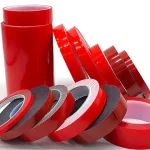
- Red Mylar Tape
- Light Yellow Mylar Tape
- Dark Yellow Mylar Tape
- Blue Mylar Tape
- Green Mylar Tape
- Based on Thickness
The overall thickness of the Mylar tape influences its mechanical strength and handling characteristics. Thickness is often measured in microns (µm, where ‘U’ likely denotes µm).- Thin Mylar Tape (approx. 50µm): Offers greater flexibility, suitable for wrapping irregular shapes or where a low profile is needed.
- Standard Thickness Mylar Tape (approx. 80µm): Provides a balance of strength and flexibility for a wide range of applications.
- Thick Mylar Tape (approx. 110µm): Delivers increased strength and durability for more demanding tasks.
- Based on Adhesive Strength

The bonding capability of Mylar tape varies, generally categorized by its adhesive tack or peel strength.- Standard Adhesion Mylar Tape (approx. 300G – 500G adhesive strength): Suitable for most general-purpose applications requiring a reliable bond.
- High Adhesion / Extra Sticky Mylar Tape (approx. 500G – 1000G adhesive strength): Designed for applications needing a stronger, more aggressive bond, or for adhering to more challenging surfaces.
Is Mylar Tape Conductive?
This is a common and frequently asked question about Mylar tape. Although Mylar tape exhibits good electrical properties and mechanical strength, it is not inherently conductive. In an energized state (when electricity is flowing), Mylar tape cannot effectively transmit electrical current. Therefore, it is not suitable for direct use in applications or scenarios requiring electrical conductivity.
However, there are specific types of Mylar tape that can be conductive:

- Metallized Mylar Tape: As mentioned earlier, Mylar film can be coated with a very thin layer of metal, most commonly aluminum foil. This metallic layer is conductive. If this metallized side is exposed or used in conjunction with a conductive adhesive, the tape system can provide electrical conductivity. These tapes are used for applications like:
- EMI/RFI Shielding: The conductive layer can block or shield electromagnetic interference (EMI) and radio frequency interference (RFI), protecting sensitive electronic components.
- Static Dissipation: Can help to dissipate static electricity in certain applications.
- Grounding: Can be used to create electrical grounding paths.
- Capacitor Manufacturing: Metallized PET film is a key component in film capacitors.
It’s crucial to distinguish between the Mylar (BoPET) film itself, which is an insulator, and any conductive coatings or adhesives that might be applied to create a conductive tape product. When selecting Mylar tape for an electrical application, it is vital to check the product specifications to confirm whether it is insulating or conductive, depending on the requirement. If insulation is needed, a standard, non-metallized Mylar tape is the correct choice. If conductivity or shielding is required, a metallized Mylar tape with appropriate conductive properties should be selected.
What is Mylar Tape Used For?
Mylar tape is primarily valued for its exceptional electrical insulation and mechanical strength, making it a staple in the electrical and electronics industries. Its most significant applications include:

- Insulation of Electrical Components: It is extensively used for insulating and wrapping components in transformers, motors, capacitors, and various other types of electrical machinery and electronic devices. This helps prevent short circuits and ensures operational reliability.
- High-Voltage Isolation in Power Supplies: Mylar tape plays a crucial role in providing high-voltage isolation, particularly between the main circuit board and the casing of switching power supplies, enhancing safety.
- Lithium Battery Assembly: It is a key material in the assembly of soft-pack lithium batteries. Specifically, Mylar tape is used to wrap and secure the protection board to the battery cells, providing essential fixation, electrical insulation, and fire-retardant properties.
Beyond these core electrical applications, Mylar tape’s versatility also sees it used in other areas:

- Visual Workplace Organization (e.g., 5S Methodology): Due to its availability in a range of distinct colors and its good durability, Mylar tape is often used for “positioning” applications. This includes color-coding, marking the designated locations for tools and equipment, demarcating work zones, aisles, or storage areas as part of 5S or other lean manufacturing visual management systems.
- General Industrial Splicing: Joining webs of material like paper or films in continuous manufacturing processes.
- Powder Coating Masking: With appropriate high-temperature adhesives (typically silicone), it can effectively mask areas during powder coating processes, withstanding curing oven temperatures.
- Durable Labels: Its printable surface and resistance to some chemicals and abrasion make it suitable for creating long-lasting labels.
How Should Mylar Tape Be Used and Stored?
To ensure optimal performance and longevity of Mylar tape, follow these essential guidelines:

- Storage
- Store Properly: Keep Mylar tape in its original roll form in a clean, dry warehouse, away from direct sunlight, rain, and sources of heat (maintain -15°C to 40°C). Avoid contact with solvents, acids, or alkalis.
- Rotate Stock: If stored for extended periods, rotate rolls quarterly to prevent deformation.
- Handling & Selection
- Handle with Care: Use appropriate lifting equipment for heavy rolls to prevent damage to tape edges. Avoid rough handling that can cause unwinding.
- Select Correctly: Choose Mylar tape specifications (type, thickness, adhesive) that precisely match your application needs and conditions.
- Do Not Mix Types: Avoid using different types or specifications of Mylar tape together in the same application.
- Application & Operation
- Maintain Cleanliness: Ensure the tape and application environment are free from contaminants, as foreign materials can cause operational issues like misalignment or breakage.
- Ensure Proper Machinery Setup: If used with machinery, ensure rollers and guides are aligned correctly, tension is appropriate, and components do not abrade the tape. Prevent “snaking” or “creeping.”
Following these key practices will help you get the best results from your Mylar tape.
Where to Buy Mylar Tape?
While Mylar tape is widely available, sourcing the right type for your specific needs often means looking beyond general retailers. Here’s where you can find Mylar tape:

- Online Retailers & Distributors
- General e-commerce platforms (like Amazon, eBay) often stock common Mylar tapes, suitable for general-purpose or smaller quantity needs.
- Specialized industrial and electronic component distributors (e.g., Digi-Key, Grainger, Mouser) offer a broader selection, including tapes with specific performance characteristics, industry certifications (like UL recognition), and those designed for electronics applications.
- Direct from Manufacturers (like Topking) and Converters
- For large volume orders, custom slit widths, specific formulations, or to ensure you’re getting precisely what your application demands, going direct to a manufacturer is highly beneficial.
- As a professional Mylar tape manufacturer, TOPKING specializes in providing high-quality Mylar tapes. We offer extensive customization options, including thickness, width, adhesive type, and color, to meet your precise application requirements. Whether you need standard rolls or customized solutions, we can fulfill a wide range of needs.
- Tape converters also purchase large rolls from manufacturers and can provide custom slitting and die-cutting services.
- Local Stores:
- Local hardware or electrical supply stores may carry some general-purpose Mylar tapes, particularly for immediate, smaller requirements.
When purchasing Mylar tape, always consider these key factors:
- Required Specifications: Clearly define the necessary thickness, width, adhesive type (acrylic, silicone), temperature rating, color, and any required certifications.
- Quantity: Determine your volume needs (single roll, case, or bulk).
- Supplier Reputation: Opt for reputable suppliers known for quality and reliability, especially for critical applications.
- Application Fit: Ensure the chosen tape is perfectly suited for your intended use. If unsure, consult with a knowledgeable supplier like Topking.
Conclusion
Mylar tape, built on a strong PET film with specialized adhesives, delivers outstanding tensile strength, stability, and electrical insulation. These properties make it a highly effective solution for diverse bonding, insulating, and protective needs. While selecting the right Mylar tape type (considering adhesive, thickness, and temperature needs) is crucial for performance, its versatility has made it essential across electronics, electrical, and general industry.
At TOPKING, we offer a wide array of Mylar tape solutions. Contact Topking today to explore our customizable options and find the perfect Mylar tape for your application, ensuring reliability and efficiency.