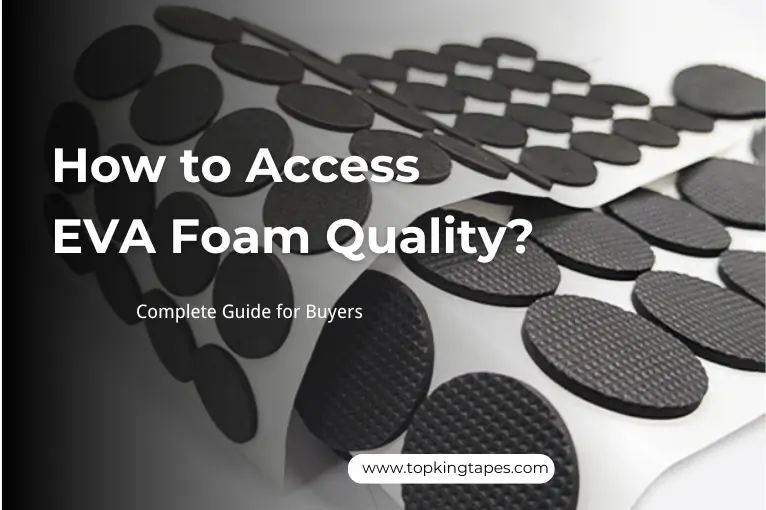
In an era prioritizing product performance and user experience, EVA foam, with its excellent cushioning, elasticity, durability, and eco-friendly characteristics, has become an indispensable material across numerous industries. From comfortable shoe soles and robust packaging liners to protective layers for sports equipment, EVA foam is ubiquitous.
However, as you’ve likely observed, the market presents EVA foam of varying quality, making selection challenging. How can one cut through the haze to choose truly high-quality EVA foam? This not only impacts final product performance but also affects cost-effectiveness and brand reputation. Before assessing the quality of EVA foam, let’s first gain a comprehensive understanding of the material.
What’s EVA Foam?
EVA foam, or Ethylene Vinyl Acetate Foam, is a high-performance elastomeric material produced through a specialized foaming process, endowing it with numerous excellent physical and chemical properties. (Read more: EVA Foam Vs. PE Foam >>)
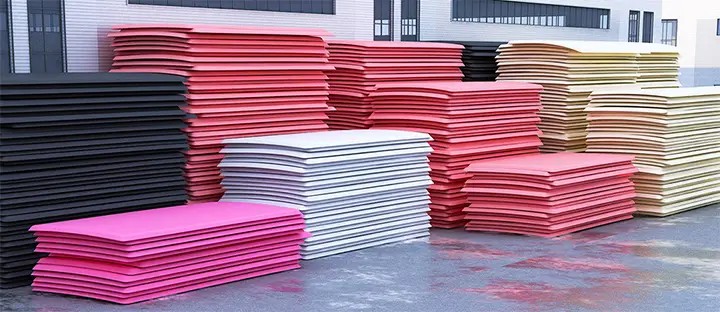
EVA Foam Advantages
- Superior Cushioning & Impact Resistance: EVA foam effectively absorbs and dissipates impact energy, providing excellent shock absorption protection.
- Good Elasticity & Resilience: The material is soft and elastic, resistant to deformation, and quickly recovers its original shape.
- Excellent Abrasion & Corrosion Resistance: It can withstand daily wear and tear and resist corrosion from various chemicals.
- Low Water Absorption & Moisture Insulation: Offers a degree of water resistance and moisture protection, along with thermal insulation capabilities.
- Environmentally Friendly & Safe: Generally non-toxic and harmless, meeting environmental standards, making it a preferred choice for many applications with high safety requirements.
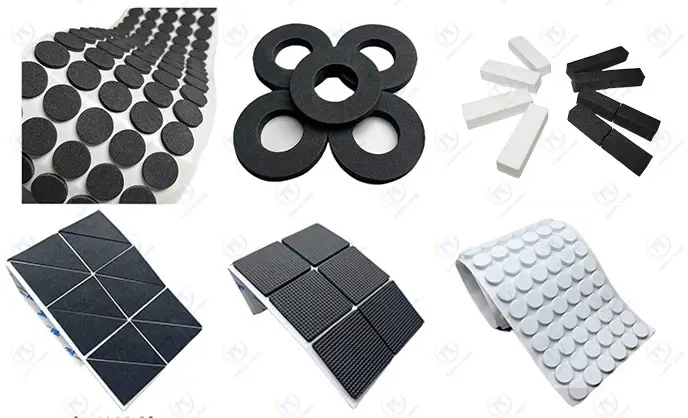
- Good Processability: Easily thermoformed, cut, and die-cut into various complex shapes. (Related product: Die-cut EVA Foam Gaskets for Electronics, Furnitures and Home Appliances >>)
EVA Foam Applications
Thanks to these advantages, EVA foam is widely used in a multitude of fields:
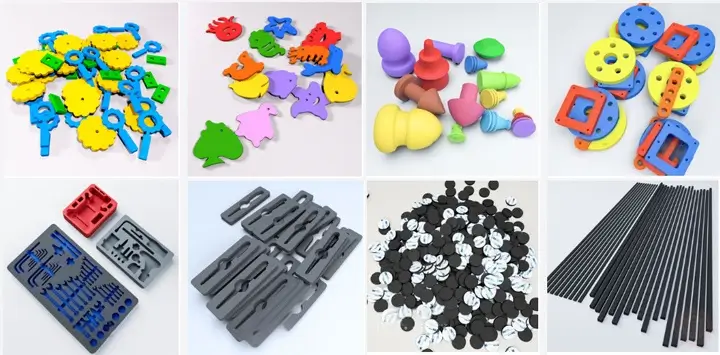
- Consumer Goods: Toys & Crafts, Footwear & Apparel Accessories, Office & Stationery Supplies, Home Decor & Furnishings, etc.
- Sports & Recreation: Protective Gear & Equipment, Fitness & Matting, etc.
- Protection & Packaging: Protective Inserts & Padding, General Packaging Solutions, etc.
- Industrial & Technical: Automotive & Marine Components, Electronics Padding, Insulation (Thermal & Acoustic), Medical & Orthopedic Devices, Hardware & Tool Storage, etc.
EVA Foam Quality Assessment: Key Points to Consider
Facing a wide array of EVA foam products, mastering correct assessment methods is crucial. Here are the key aspects to focus on when evaluating EVA foam quality:
1. Surface Characteristics & Tactile Feel
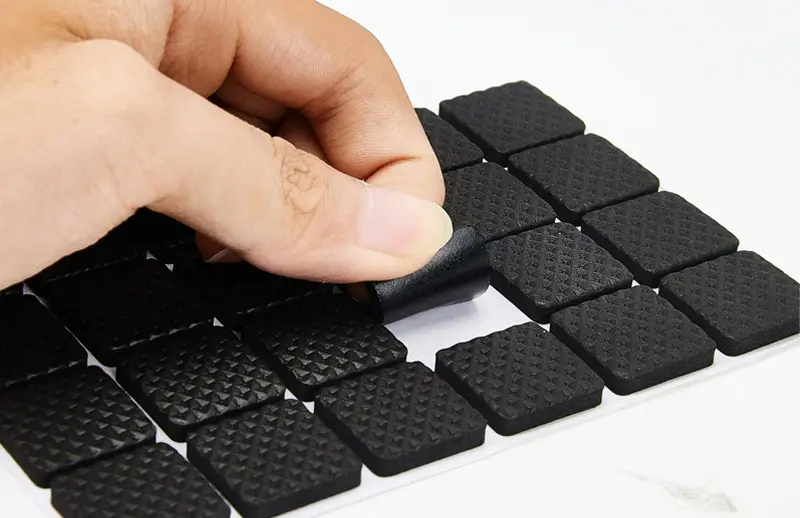
- Surface Feel & Tackiness: High-quality EVA foam typically has a soft surface feel, but without a noticeable “sticky” sensation (distinguishing it from materials coated with adhesive). It should exhibit a unique fine, slightly “tacky” feel inherent to the material itself, not due to residual glue.
- Tensile Strength: When stretched, EVA foam should demonstrate good resilience. Its elongation is stronger than Low-Density Polyethylene (LDPE), allowing it to withstand a certain degree of stretching without easily breaking.
- Transparency & Appearance: For white EVA foam, premium materials usually possess high transparency, appearing clear. Its feel and look might resemble PVC film, but it’s important to recognize their fundamental difference – EVA foam is a foamed material with a spongy texture.
2. Structure & Performance
- Understanding Hardness (Durometer): The softness or hardness of EVA foam is typically measured in “degrees” or “Durometer” (Shore Hardness). A higher durometer indicates a harder material. Common types include high-foam EVA with hardness ratings like 35-40 degrees (softer) and 50-55 degrees (medium hardness). High-foam EVA, with its excellent elasticity and resistance to deformation, is often used in applications requiring support and cushioning.
- Support & Protection Function: When used as interlayers, bottom layers for soft bags, or protective padding, EVA foam provides excellent support, helping items maintain their shape or protecting items within a case from impact. For instance, EVA used in protective pads or sports guards needs superior impact resistance while ensuring comfort and robust protection.
- Forming Capabilities: EVA foam is highly suitable for thermoforming. It can be processed into specific shapes and thicknesses according to design requirements, ensuring precise finished product dimensions (e.g., a 17cm thick protective pad may reduce to 14-16mm after hot pressing).
3. Key Data Parameters
Understanding the critical technical specifications of EVA foam is fundamental to ensuring it meets application requirements:
- Density (Density): EVA foam’s density is a key indicator of its weight and cushioning performance. Common density ranges include 35-38P (Shore C), 45-48P, and for specialized applications, higher densities like 55-60P or even 75-80P are available. Density is typically measured with a durometer, with an acceptable error margin of ±3P. Higher density generally means a harder material with better support.
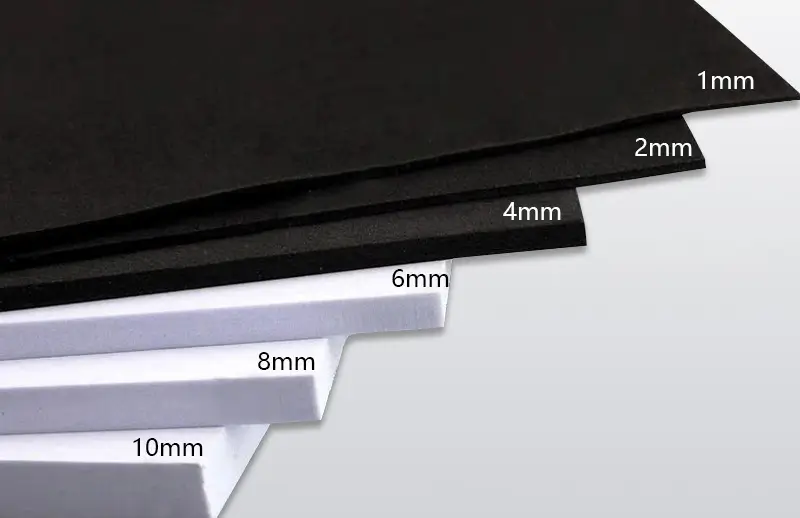
- Thickness (Thickness): EVA foam is available in a wide thickness range, typically from 0.3mm to 40mm, with a standard thickness tolerance of approximately ±0.1mm.
- Specifications (Specification): EVA foam is supplied in roll form (common thicknesses 0.3-5mm, widths of 38″, 40″, 46″, and lengths of 50-300 yards) and sheet form (thicknesses 5-40mm, common sheet size 38″x80″).
- Color (Color): Common colors are black and white, but a variety of other colors such as red, yellow, green, blue, and purple can be custom-ordered.
4. Foaming Process & Intrinsic Quality
The excellent properties of EVA foam stem from its unique foaming process. At high temperatures, the blowing agent within the EVA material decomposes, releasing a large amount of gas to form small bubbles (nuclei). When pressure is suddenly released, these nuclei expand, ultimately creating a foamed material with superior cushioning, insulation, and sound-dampening characteristics. A uniform and fine cellular structure is a hallmark of high-quality EVA foam, directly influencing its elasticity and impact resistance.
Your Expert Partner for High-Quality EVA Foam Die-Cutting
Selecting high-quality EVA foam is the foundation for successful products, and precise die-cutting is key to realizing their full potential. TOPKING Tapes specializes in EVA foam die-cutting services, leveraging extensive experience and advanced equipment to:
- Accurately Assess Material Quality: We possess deep knowledge of EVA foam’s technical specifications and performance characteristics, enabling us to select the most suitable high-quality EVA material for your application.
- Provide Precision Die-Cutting Services: Whether it’s rolls or sheets, EVA foam of various densities, thicknesses, and colors, we can provide high-precision, efficient die-cutting services according to your design drawings, ensuring every finished component meets your stringent requirements.
- Optimize Product Solutions: By understanding the properties of EVA foam, we can offer optimal die-cutting solutions to enhance your product performance and reduce manufacturing costs.
Conclusion
Identifying the quality of EVA foam is achievable by focusing on its core attributes: from a fine, soft surface feel and excellent tensile strength, to precise density and thickness specifications, as well as superior elasticity and impact resistance – each aspect contributes to the final product’s performance. Understanding EVA foam’s characteristics, benefits, and uses is the prerequisite for selecting high-quality material. High-quality EVA foam not only provides excellent cushioning and protection but also elevates product value and corporate credibility.